Electrical fit
Verify voltage, current, polarity, connectors, and combined-array limits.
Buying guide
Portable panels can extend battery use, but electrical limits and real sunlight determine charging.
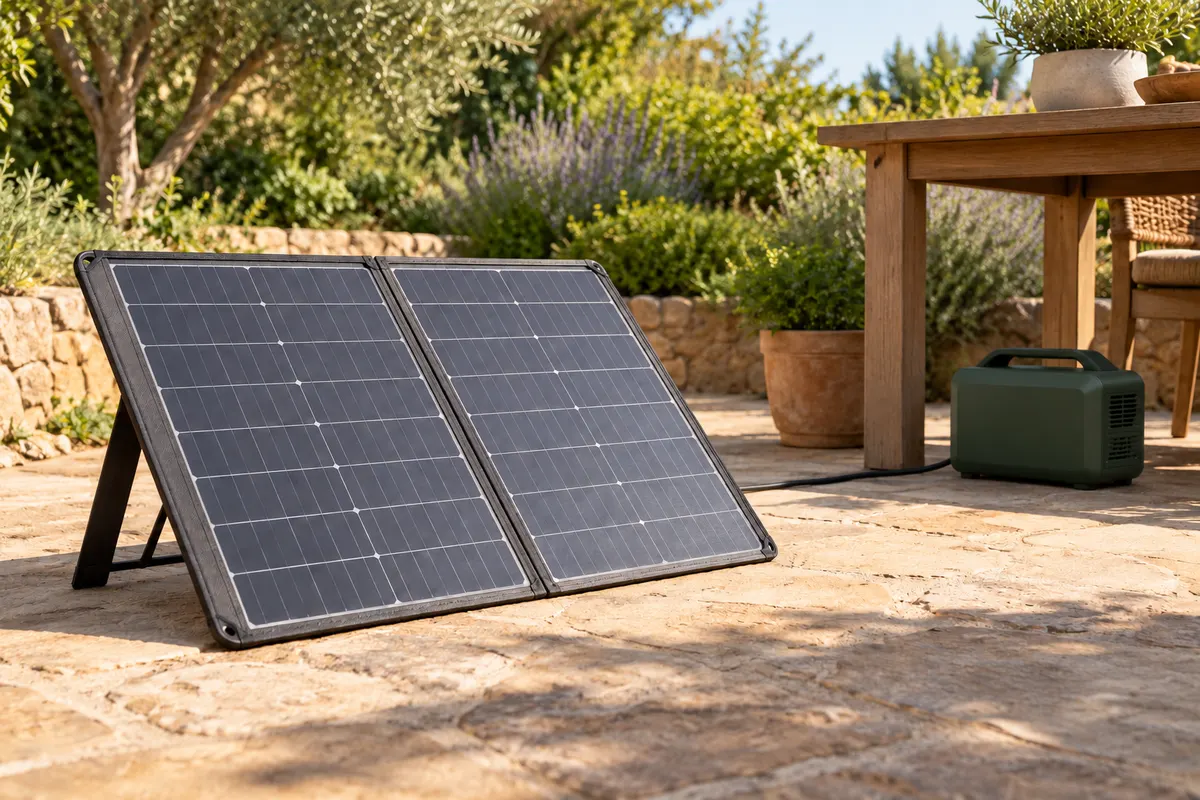
Specifications matter only when they connect to a load, location, or charging plan.
Verify voltage, current, polarity, connectors, and combined-array limits.
Rated watts are measured under defined conditions, not guaranteed field output.
Panel angle and partial shade can materially change charging performance.
Review weather guidance, stand design, cables, and storage requirements.
Start with the receiving power station manual. Record allowable voltage, current, polarity and connection details before considering panel wattage. Check combined values when more than one panel is used. An adapter that physically fits is not evidence that the electrical setup is permitted. Use the manufacturer instructions for the exact models and wiring arrangement.
Folded dimensions, mass, stand stability and cable reach can matter as much as nominal wattage. Sketch where the battery can remain sheltered while the panel faces the sun. Check weather guidance for both pieces of equipment; do not assume a panel rating also applies to a battery or connector. Consider the time and space needed to set up at each stop.
Treat rated power as a comparison under specified conditions, not guaranteed energy for a whole day. Placement, shade and changing conditions can make a single peak reading unrepresentative. Log energy delivered over the relevant interval when planning a repeatable setup. Size battery storage separately so the appliance plan does not depend on an optimistic solar estimate.
Estimate energy with the power station size calculator. Editorial category guidance reviewed 2026-10-19.
Connect this decision to the product specifications, energy estimate and charging equipment.